
*ADMISSIONS CONSULTATION NOW LIVE FOR 2027/28 - CLICK ON LINKS & DOWNLOADS FOR MORE INFORMATION*
Biscovey Academy

Year 5 Maple Class

Mr C Hayne

Mr C Hayne

Class Teacher

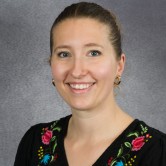
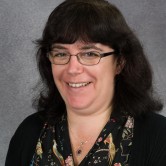
Mrs  Eaton

Mrs Eaton

Support Staff


Welcome to Maple Class 

Welcome to Spring 1!

We hope you all had a wonderful break and a great start to the new year. This half term, we’re excited to provide engaging lessons, offer fantastic learning experiences, and begin our swimming sessions. It’s going to be an exciting time for the children, full of lots of  opportunities to learn.

In VIPERS this half term, we are reading ‘The 1000 Year Old Boy’ by Ross Welford.

The 1000 Year Old Boy reads: There are lots of stories about people who want to live forever. This is not one of those stories. This is a story about someone who wants to stop… Alfie Monk is like any other nearly teenage boy – except he’s a thousand years old and can remember the last Viking invasion of England. So, when everything Alfie knows and loves is destroyed in a fire, and the modern world comes crashing in. Alfie embarks on a mission to find friendship, acceptance and a different way to live… which means finding a way to make sure he will eventually die.

English

This half term we will be delving into two different topics, a setting description and a diary recount. Our first write will be going into a dark fairytale using a range of features to describe a setting in lots of detail. We can’t wait to get creative!

Maths

We begin this half term looking at the formal written methods used for X and ÷ whole numbers with up to 4 digits by both 1 and 2 digit numbers.  We will then revisit Fractions where the focus will be on X fractions by integers and finding fractions of amounts.  Following this, we will progress onto decimals and percentages: looking at fraction, decimal, percentage equivalents of numbers with up to 2 decimal places.

Science

This half term, we will be continuing with our focus on Materials: ‘Are all materials the same?’ with a more practical emphasis, applying our knowledge into a range of experiments. We will be looking at reversible and irreversible changes

History

This term marks the first of our History topics; the Anglo-Saxons. Our umbrella question is, ‘So, how dark were the Dark Ages really?’ Over the course of 5 key questions, the children will learn about why they invaded Britain, the impact of Christianity and answer the question, ‘Just how ‘great’ was Alfred?’ In addition, they will also become detectives and investigate the mystery of the empty grave!

DT

The children will be focusing on the Textiles element of DT.  As well as practising threading a needle and revising ‘running stitch, they will also learn how to use cross-stitch and appliqué when designing and making a cushion.

PE - Dance

We will learn how to express the fierce spirit and teamwork of Anglo-Saxon warriors. Through creative movement, they will choreograph and perform their own war dance, drawing inspiration from historical battle rituals. This exciting unit blends history and physical expression, building confidence, coordination, and an appreciation for the past. On the week commencing 12th January, we will be having swimming lessons at Polkyth for the week.

PSHE

Over the next five weeks, we will explore the importance of diversity. They’ll discover why diversity enriches our lives, celebrate the amazing qualities that make us unique, and learn how to recognise and challenge stereotypes. Through discussions and activities, students will identify role models who embody the brilliance of diversity and reflect on ways to celebrate differences in their own communities.

French

Through interactive activities and role-play, children will learn how to talk with increasingly more accurate pronunciation about themselves, including being able to respond to questions about their name, age and how they are feeling. They will also learn the alphabet in French and how to count to 20.

Computing

Over the next five weeks, students will learn what databases are, how they work, and the differences between paper and digital formats. They’ll explore how to search and filter information efficiently and understand the advantages of presenting data as numbers or charts. By discovering real-life applications of databases, students will gain practical skills and insights into how data shapes the world around us.